Showing posts with label feminism. Show all posts

Sunday, January 19, 2014

Gay marriage and working parents.

I wish I had more time to explore my thoughts on this blog, but my life has just been so busy lately.

So very quick thought: when it comes to gay marriage, people talk about how the family is the bedrock of society and must be protected. But when it comes to measures to support working parents (e.g. paid maternity leave or paternity leave or work-based childcare, etc.), people talk about how it's a given couple's choice to have children, so they should figure it out. Why should people who don't have kids get less "perks" than people who do?

Does this seem inconsistent to anyone else?

I haven't had a chance to really ruminate on this, but it seems like a discordant standard. If the point is to improve the family unit, how much would it be improved by making it easier for mothers and fathers to earn a living and be there for their kids? If the family is the bedrock of society, aren't procreating couples fulfilling an important social function that we (as a whole society) need and desire them to fulfill?

Maybe I'm just listening to the feedback from two totally different groups--people who care about the family unit when we are discussing gay marriage are different people than people who think couple's should figure it out when discussing working parents. But somehow I don't think so. I don't know, thoughts?


Sunday, October 20, 2013

The 4 Legacies of Feminism

I don't post much anymore because I have so many other things going on in life right now that I pretty much always feel guilty if I stop to ruminate on politics and stop trying to get all those other things done.

However, I saw this link today and thought I'd right a really quick post, which also means it's probably sloppy because I am not taking the time to read the link carefully and make sure I understand the author's POV and research whether his factual claims are correct and find sources to back up any counter claims I have and on and on.

So there's those disclaimers.

Anyway, from my skimming it looks like some guy is saying that yeah yeah, sure sure, feminism has helped women have more political and professional success, and now women's college sports teams get lots of money, and stuff...but has it been worth it? Nope. And there are four reasons why:

1) Young women now think they can have sex "just as men do," meaning have sex for fun and not have to expect a long-term commitment in order to have sex. This is bad because of the psychological and emotional effects on women.

2) "The second awful legacy of feminism has been the belief among women that they could and should postpone marriage until they developed their careers." This is bad because "the decade or more during which women have the best chance to attract men is spent being preoccupied with developing a career." Which is in turn bad because "most women are not programmed to prefer a great career to a great man and a family."

3) Women think they should work outside the home. This is bad because more children than ever aren't raised by their mothers, and are more often now raised by nannies/daycare.

4) Feminism has demasculinized men. Feminism has obliterated roles, so men no longer have the role of taking responsibility for the family. This is bad because "most men want to be honored in some way — as a husband, a father, a provider, as an accomplished something; they don’t want merely to be “equal partners” with a wife."


Okay, so, my "quick" thoughts (this is already taking too long) one at a time:

1) From what I've seen of the people I know, sex is different for different people. I agree that men are more likely to be emotionally and psychologically okay with casual sex than women, at least from my sample set. However I do know women who are also okay with casual sex, and when they are in a situation where third parties aren't telling them how to feel or act about it, the ones I know who feel this way seem perfectly content to me. From what I've seen, the most important factor is being able to be very direct and honest with yourself and the people you're having sex with about what it is you need and want, and finding people who feel the same way and can agree to that. This applies to people who want long-term, committed, monogamous sexual relationship, or people who want celibacy until marriage, or people who want to sleep with multiple people before marriage, sometimes even at the same time. I don't pretend all those options apply equally well for me (they certainly don't) but I've known people in every category, and when they had partners who were on the same page, they seemed to do well.

The author cites a correlation in women between depression and multiple sex partners. The author implies that having multiple sex partners makes women depressed, as opposed to depressed women being more likely to have multiple sex partners. I imagine it goes both ways, depending on the personality.

I think the ideal is for people to understand that how they want to approach sex is personal, and they should feel no more pressured to have casual sex in order to be "feminist" than they should feel pressured to have no sex until marriage in order to be "feminine."

I do think casual sex has major drawbacks, mostly because pregnancy is always a risk and it seems to me a lot of people put being able to have sex above making sure they never want an abortion. I think that's an important point but also a bit of a tangent, because the author's point seems to be that women are becoming emotionally and psychologically scarred by living in a society that says it's okay for women to have sex drives "as men do."

I also think it's a BS double standard to call on women to be the purists and hold off while easily accepting that's "just how men are." That could probably be a separate blog post too.

AND I think the authors skips over a major factor of "sexual liberation"--less shame and guilt placed on people who don't want to be celibate until marriage. I've thought about this before. Where I come from and where I was raised, I know people (men and women, but mostly women) who had various sexual experiences in high school and went through major bouts of shame and guilt, but it wasn't some natural, biochemical reaction. It was pretty clearly stemming from being raised to believe most pre-marital sexual experiences are very wrong (especially for women). I've seen some of those same people get older and come to accept that it can be okay to have sexual experiences outside of the template of what their parents demanded, and they've become much happier for it.

When I was in high school I thought my distant someday-husband would be angry or disappointed or disgusted if I had certain sexual experiences before meeting him. The boyfriend I have now actually could hardly care less what my history was before we got together, and I feel the same way about his history. All we really care about is how we treat each other, our loyalty and communication now. And I've thought before about how, had I been born decades, much less centuries, earlier, it would not have been that way. The repercussions for extra-marital sexual experiences (especially for women) could have ranged from my would-be husband leaving me outright to social ostracization to stoning, whatever. Instead, I am with a man who doesn't value me based on my "purity." He cares for me because of my mind, my personality, the way I treat him, and so on. And I'm grateful for that, I know it's not that way for everyone and wouldn't have been for me in a different era. And I think the sexual revolution brought me that. (Or maybe I just have a really great guy? Probably both.)

And I think society treating sex more casually has also affected how sexual assault is treated now compared to how it once was. It's not perfect, of course, but from what I can tell, victim-blaming has decreased enormously since decades past. (Hell, this case was only in 1989!) Wearing a provocative outfit doesn't make it kinda sorta "more okay" for someone to rape her, and I think that's because our society doesn't so strongly correlate casual sex with sin, not as it used to. And I also think it's because in general women are increasingly viewed less as objects and more as people. Getting less stuck on female purity and moving more toward it's-none-of-your-damn-business has, I think, been very good for women.

And while I'm on the subject of sexual assault, I would like to point out that the authors cavalier hand-wavy list of what feminism has accomplished is terribly short. People like this author are the people who say feminism has decreased respect for women mostly, by making sex casual, and yet, hey, isn't it great that marital rape is now illegal? It was only 1993 that the 50th state finally put that crime on the books. But I digress.

So I do think there are costs to how casual sex has gotten, but I think there are great benefits too.

Okay, moving on...


2) I have postponed marriage for multiple reasons, one of which is an interest in my education and career. My mother dropped out of college to get married, and when they got divorced she had no degree and a great deal of difficulty getting a job that allowed her to support herself and her children. This had a great impact on me and even as a child I thought about how there's no way I would get married until I at least had a degree. And given our country's epic divorce rates, I don't think it's unreasonable for plenty of women to feel the same way. Of course you don't get married planning on getting divorced--no one does, I would hope. But it's like the song goes:


Don’t expect anyone else to support you. Maybe you have a trust fund, 
maybe you have a wealthy spouse; but you never know when either one 
might run out.


However, not marrying for the sake of a career doesn't mean I can't date or be in a relationship. This author acts like if you care about education/career you can't even be on the market at all. Speaking as someone working on her master's, I know plenty of women with bachelor's and more who are married or engaged or in long-term relationships. Weird how men have been able to pursue both education/career and relationships simultaneously all this time, but the author seems to assume women can only pursue one or the other. I'm in a 4+ year relationship with a great man, and it's true we aren't married at this point, but it would be easy enough for us to get married as soon as we both feel ready, and it's like that for plenty of people.

I do think there's something to be said for it being easier for women to find mates in their twenties than later, and maybe that's true for men too but I think it's more true for women. At least from what I've seen, it's easier for "older" men (30 and up) to still find partners, even just much younger partners, than it is for "older" women.

However, as I said, I don't think women postponing marriage necessarily means women postponing relationships/courtship, and I also don't think all the women who really don't ever get married necessarily regret it as much as this guy suggests. Meanwhile, research shows women who delay marriage (but still ultimately get married) have lower rates of divorce and higher incomes. Sounds good to me.

As far as his comment about how women are programmed, I do think women are far more relationship-oriented than men and I think women are more likely to emphasize having a family than men. I get how a woman shouldn't go to college just because some ambiguous group ("society" or "feminists") tells her she should, especially if she would really rather settle down and start having kids. However, I'm not convinced that's the reason most women go to college. I think most women go to college for the same reason most men do--they want to develop careers, be financially secure, exercise their minds learning new things, and so on. Or, as the author puts it in his 4th point about men, women want to have "accomplished something." Apparently it makes sense for men to desire to be "honored" for "accomplishing something" but it doesn't make sense for women to desire the same thing, if that thing isn't "being a great stay-at-home mom." *eyeroll*


3) There's a difference between saying women "think" they should work outside the home and saying women want to work outside the home. See the point above. If a woman is only working outside the home because she feels she ought to, and it costs other parts of her life like raising her own kids, I agree that's a problem. The people I know who call themselves feminists believe women should be able to either work outside the home or be stay-at-home parents, and they believe men should be able to do that too, as long as each person finds a partner who wants the same arrangement.

I don't know enough about raising kids to comment on how to do it, but I can say my mom stayed at home with us and it was great and I'm glad she did, and I can totally understand why parents would want to do that. Personally I am very conflicted because I do want children and I think it would be great to stay at home and raise them. At the same time, I like my career path and would like my own career, partially to help financially support our family and partially because I get satisfaction out of exercising my mind and learning new material and creating things myself. I feel weird at the thought of living off of the fruits of my husband's work only, without contributing.

Speaking of finances, I expect a lot of women work outside the home even when they don't want to--not because "feminists" have told them to, but because the family needs the money. I've known plenty of families in which both parents work to get by, especially with more kids. So once again, the author suggests "feminists" and "society" have pushed women to do a thing they neither want nor need to do, but I doubt very much that's the case. In fact, even moreso than attending college, I expect women work outside the home because of lots of reasons besides "feminism" told them to.


4) I like how he puts "equal partners" in quotes. I found this part so condescendingly stupid I thought about just leaving it to speak for itself. But no.

I will just say I consider the man I am with quite masculine--in some ways more masculine than most men. And he treats me as an equal and isn't threatened by that arrangement at all. Masculinity and feminism are not mutually exclusive traits, and how sad to suggest as much to men. Everyone has different tastes in partners, and that's fine, but I know I couldn't ever be with a man whose very identity and sense of self is threatened by me wanting to have my own career, contributing financially (or, *gasp*, possibly even make more money than him!), wanting to have equal say in how we live our lives. I don't usually think of it this way, but I suppose he and I have a "feminist" relationship, and I think it works very well for us. There are some things each of us is naturally better at that wouldn't fit stereotypical gender roles, but we feel free to just do what we're best at and work with each other that way.

I know couples my age with more traditional gender-roled relationships, and that works very well for them. As with sex, I think in any relationship it's important to be able to be honest with yourself and your partner about who you are, how you are, and how you want the relationship to be, and for some people they really want it to be more traditional and that makes them happy, and more power to 'em. And for me, I like a more egalitarian set up, and my bf is good with that, and that works for us.


So, upon thinking about these four major legacies of feminism, I have to say I am as convinced as ever that overall feminism has been a great thing, and I'm very grateful to have been born in a time where my boyfriend and I feel free to live our lives how they work for us.

Aaaand this took  me like 45 minutes. I knew it!

Tuesday, March 12, 2013

"Reproductive Rights are Human Rights"


Stumbled upon this Elle story about men who don't want to be fathers but are "forced"* to by their pregnant partners.
Dubay's argument was that while his girlfriend was permitted by the Constitution to end her pregnancy for any reason, he had no comparable right, in violation of the Equal Protection clause. As a result, he contended, he shouldn't have to be financially responsible for the child.
As the public face of the case, Feit duked it out on CNN with then–National Organization for Women president Kim Gandy, who argued that once a child is born, the rights of the child supersede those of the parents. Since this was the law in all 50 states, men had to accept their financial obligations, Gandy said. Elsewhere on the airwaves, Dr. Phil chastised Dubay—he'd exercised choice, all right, a choice to practice condomless sex. And Fox's Bill O'Reilly bullied Feit with declarations about what it means to be a man and taking responsibil­ity for one's own actions.
As Feit points out, this reasoning is ironically similar to that often used against women's reproductive rights: Abortion encourages sexual promiscuity and irresponsibility; the right of the fetus should override a woman's right to terminate a pregnancy that could've been avoided with birth control; women should have to suffer the consequences of their sexual dalliances.
Interesting conundrum. Do the men have a point? Do abortion rights and child support laws create a sexist standard? I say it depends. It comes to this: Why do pro-choicers think abortion is justified?

If abortion is justified because of bodily rights, then the double standard between the genders makes sense. When it comes to procreation, men and women don't have the same bodily responsibilities at all, so of course they don't have the same rights either. If it's about physical autonomy, you can just say "no one can use your body against your will" and that is as true of men as of women. Sure, it never actually comes up for men in terms of pregnancy, but if it did they'd presumably have the same choice to abort; it's a consistent standard.


But if that's all abortion is about, why do we hear so much about reproductive rights? People sometimes use the phrases "reproductive rights" and "bodily rights" interchangeably, but they aren't the same.

When we talk about reproductive rights, we talk about women being able to choose whether and when they want to become mothers. We talk about each woman carefully considering her responsibilities to her other children, or her educational and career goals, or her concerns over a bad relationship, or her financial issues. What does any of that have to do with her body? Planned Parenthood's motto (Every child a wanted child!) isn't about bodily autonomy--it's about whether people want to be parents, whether they want to reproduce. It's about reproductive rights.

I'm assuming "humans" include "men," right?
 Even in Roe v. Wade itself, the Court created a right to abortion based on much more than bodily concerns:
Specific and direct harm medically diagnosable even in early pregnancy may be involved. Maternity, or additional offspring, may force upon the woman a distressful life and future. Psychological harm may be imminent. Mental and physical health may be taxed by child care. There is also the distress, for all concerned, associated with the unwanted child, and there is the problem of bringing a child into a family already unable, psychologically and otherwise, to care for it. In other cases, as in this one, the additional difficulties and continuing stigma of unwed motherhood may be involved.
So the Supreme Court considered:
  • Other offspring;
  • Psychological harm;
  • Mental health;
  • Distress of other people involved;
  • Preparedness to care for a child; and
  • Stigma of unwed motherhood.

None of that is about bodily rights.

But the Court didn't leave bodily rights out entirely. In the above passage, they also cited concern over  direct medical harm during a pregnancy and physical health during child care. Then again, the Court disagreed with the idea that the right to abortion is absolute or has much to do with unlimited bodily rights.
...some amici argue that the woman's right is absolute and that she is entitled to terminate her pregnancy at whatever time, in whatever way, and for whatever reason she alone chooses. With this we do not agree. ... The privacy right involved, therefore, cannot be said to be absolute. In fact, it is not clear to us that the claim asserted by some amici that one has an unlimited right to do with one's body as one pleases bears a close relationship to the right of privacy previously articulated in the Court's decisions. The Court has refused to recognize an unlimited right of this kind in the past.
So this isn't just about bodily rights. Wouldn't all the non-physical reasons a woman might be unwilling to raise a child apply equally to an unwilling man? If pro-choicers believe in not just bodily rights, but reproductive freedom, why do so many of them apply that freedom to women only?

*I put the word "forced" in quotes because, unless you were raped, no one made you get a woman pregnant, and therefore no one made you become a father. You took that risk yourself. The difference between me and most pro-choicers, though, is that I apply the same logic to both genders.

Saturday, March 2, 2013

Can I be a feminist too?


I consider myself a feminist. I’m a big proponent of women going to college and building their own careers (and I’d like to see more female scientists). I’m very big on a balance between our relationships and the rest of our lives; you should not be made or broken by whether you're single or dating or married. I think society concentrates far too much on our looks, too little on our minds. I’m a huge advocate of expecting and demanding respect from others, particularly from romantic interests. I believe empowered women include women who value themselves, and expect their partners to value them as well. Cruelty, indifference, derision, dishonesty—I hate seeing people tolerate poor treatment, especially due to a fear of being single. I also hate victim-blaming. I’m grateful my boyfriend, brothers, and guy friends understand that the standard is not "it's okay as long as she doesn't say 'no'" but rather "it's not okay unless she says 'yes.'" I’d love for a lot more people to understand this.

I consider myself a feminist. I’m humbled by the women who’ve gone before me, who helped create the opportunities I enjoy today. I’m proud of and inspired by the women who fought for my ability to vote, get an education, own property, access birth control, serve in the military, hold political office, stand up to sexual harassment, graduate from college, and on and on. I feel grateful to modern role models who speak out against ridiculous body expectations, or sexual expectations, or what have you.

Oh, Jennifer Lawrence :-)

I consider myself a feminist and my heart and mind go out to fellow feminists in many respects. I'm glad to be a part of our movement toward equality, making the world better for my daughters. I feel a kinship with the men and women who also work toward that goal.

But then we turn to the topic of abortion, and suddenly I’m shoved right out of the feminist movement and into an ill-fitting stereotype. Apparently pro-life women hate sex and (simultaneously, somehow) think women have a duty to procreate. Apparently, because I'm pro-life I don’t believe our gender can or should make our own decisions. Supposedly I don’t think women should have their own educations, careers, or lives outside of the kitchen (or the bedroom). I'm told I don’t even care if women die. I'm told, in fact, that I hate women, including myself. All of the gender issues I care about so deeply are a farce, smoke and mirrors to hide my backward, misogynistic, sinister agenda of reducing my gender to a bunch of baby incubators.

In reality, I'm pro-life because I believe the non-defensive killing of other human beings is wrong. How sad that this perspective is enough to destroy my credibility as a feminist. 

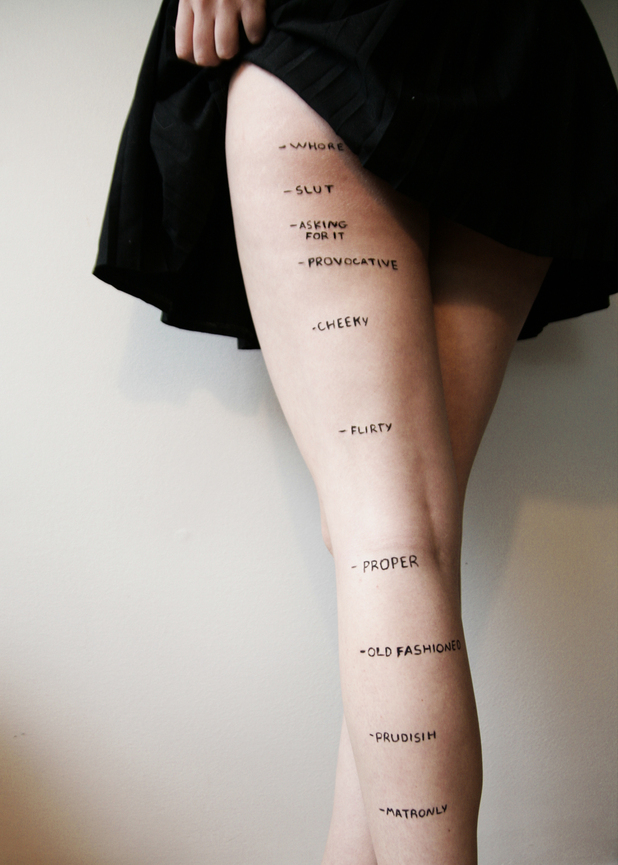
The truth is I think women should have control over their bodies, and that their sexual decisions should be their own. I think consenting adults should be free to have sex with whomever. I'm glad we live in a society in which birth control is legal and common, and I'd like to see better sex education so more people will use birth control effectively. I really dislike the double standards society has regarding men and women's sex lives. (For example, the phrase "man-whore" irritates me because it seems to imply that normally women are "whores," so in this case we have to clarify.) I can't stand the "slut vs. prude" dichotomy, as if women can only be one or the other, and we sure can't win either way. 

Choose your stereotype.
 
I also don't believe anyone has a duty to procreate, and I would love it if no one got pregnant who didn't want to be pregnant.

I do believe, though, that once a woman is pregnant, things have changed. I see a huge moral difference between preventing a pregnancy and terminating one, because I recognize the human fetus as part of our species, warranting protection. 

I don't take this position lightly. I understand how dramatically pregnancy, childbirth, and child-rearing alter women's lives. Indeed I think part of feminism is transforming society so that procreation doesn't affect women so disproportionately. We need better maternity leave and childcare options. We need to break down stigmas surrounding single, student, and working mothers. I'd love to live in a society where employers understand that supporting their pregnant and parenting employees means supporting productive citizens and healthy families. If our society had better support for pregnancy and child-rearing, I believe less women would feel compelled to choose abortion in the first place. 

But in any case, I flatly reject the idea that only when women are able to have their offspring killed can we have the same opportunities as men. If that's equality, it's an abysmal form.

I consider myself a feminist, and I'm pro-life. I know I'm not the only one.


[Re-posted at Secular Pro-Life]

Wednesday, February 20, 2013

Maternity Leave


Keep on, Minnesota:

Rep. Sandra Masin was one of 16 house legislators to author the bill, H.F. 463, all of whom hail from the DFL party. Six of the co-authors were male. The legislation was introduced on Monday by the chief author, Minneapolis Rep. Phyllis Kahn.

The bill requires employers to grant a minimum amount of maternity leave to all women for a "reasonable period of time," with a maximum of up to 12 weeks of unpaid leave of absence for female employees disabled by pregnancy, childbirth, or related medical conditions. Additionally, the employee would be entitled to use of any accrued vacation or sick leave during this period of time.

If passed, the bill would also oblige employers to provide reasonable accommodation for employees laboring under conditions related to pregnancy and childbirth, as per the woman's request or the advice of her doctor. The legislators describe "reasonable accommodation" as seating, frequent restroom breaks, and limits to heavy lifting, among other things. If possible, the employer must transfer a pregnant woman to light duty, though no employer would be required to create a job that didn't previously exist. The bill further states that employers will not be required to displace or discharge other employees to accommodate a pregnant worker.

A different perspective:
For hard-working professional women accustomed to overloaded calendars and constant communication with colleagues and customers, the isolation of maternity leave can be a shock. After the birth of my first child, I used to joke with my husband that for the sanity of new mothers an iPhone should be just as mandatory as a car seat when leaving the hospital. Yes, bonding with your baby during middle-of-the-night feedings is a wonderful thing, but when you’re stuck in a chair nursing several hours every day, that smartphone can also feel like a much-needed lifeline to the outside world.
...
What happens much more often, according to Mathiason, is that professional women are upset when they aren’t allowed to continue communicating with clients, directing projects or managing their teams while on leave. In fact, pregnancy-related litigation is actually up in recent years, he says, as more women come back from maternity leave, get laid off several months later for reasons that may be unrelated to their leave, and argue they weren’t kept in the loop while they were away.

Maternity leave for teens?
New Mexico's public schools will be required to grant leave to teenage parents under legislation approved by the House.
  
The measure will establish a statewide policy requiring at least 10 days of leave when a student gives birth. The excused absences also will be available to the child's father.
  
A pregnant teen or student who is a parent will receive four days of leave per semester. That's in addition to the absences allowed for all students.
  
Schools must provide an opportunity for students to make up the work they missed while on maternity or parenting leave.

Monday, January 28, 2013

My Ideal America: Careers vs. Child-rearing


I think people should be careful not to confuse biological drives with social requirements.

Specifically, I believe women are more likely than men to have a biological urge to stay at home and raise children, and I don't think there's anything wrong with that. My problem is when society (the ever ambiguous "society") pressures individual women to sacrifice their careers and be stay-at-home moms whether they happen to have that biological urge or not.

Similarly, I think men are more likely than women to have a biological urge to go out and build careers and financially support their families, and I think that's great. My problem is when society pressures individual men to go out in the work force and not stay at home with their children whether they happen to have that biological urge or not.

I think we have biologically-based gender differences that are socially reinforced. I'm not sure how acute those differences would be if society didn't reinforce them, though I still think the differences would exist. I would prefer that each couple decides between themselves how they want to balance careers, financial concerns, and child-rearing without having to factor in how the vague "society" will react to those decisions.

I expect a mind-your-own-business society would mean more stay-at-home dads and more bread-winning moms than there are right now, though overall there would still be more stay-at-home moms than dads, and more bread-winning dads than moms. Either way, people should be able to play to their strengths regardless of whether their strengths follow typical gender norms.

Also, this movie is really funny. I love Michael Keaton.

Sunday, January 13, 2013

On Raising a Daughter

Kaitlyn of The Abortion Gang writes about why she is terrified to have a daughter:
I thought about what I would like to say in a letter to a someday-daughter – I’m surrounded by children now, in my office, in my personal life, they’re everywhere – and I got a little stuck because, try as I might to think of something inspiring or powerful or comforting, something that I would have liked to read during the difficult years in my life, all I could think, the one sentence thundering through my head, was sad and resigned:
“I hope the world doesn’t fuck you up too badly, sweetie.”
 Kaitlyn explains that she feels having a daughter would be a greater challenge than having a son because of "the vicious things visited upon young women from infancy through adulthood." Kaitlyn wonders, "How can I fairly bring a girl into this world knowing that the odds of her being raped, assaulted, and abused are so very, very high? What of the smaller daily humiliations and their physical manifestations, like the high rates of eating disorders?"

The whole piece irritated me.

Maybe I've just been very lucky. My parents raised my brothers and sisters and me with high standards regardless of our gender. For example, I was expected to get A's in math classes, and so I did. I didn't even know there's supposed to be a gender distinction in math performance until I reached college. My brothers and sisters and I were taught to stand up for ourselves, and each other, if anyone picked on us. And as we've grown into adults we've all learned well that life can be hard, that people can be awful, and that we should face it head on, tolerating as little bad behavior as possible. But I didn't really start thinking about any of this from a gender-specific perspective until I was much older, a couple years into college.

In the last few years I've gone from seeing things generally as an adult to seeing things more specifically as a woman. My interest in politics, especially the abortion debate, has probably played a role, but I think the bigger factor has been the women I've met. I know plenty of smart, hard-working women who actively build their own lives, but here I'm writing specifically about women who frequently speak out on gender issues. These women have drawn my attention to problems I hadn't really considered before; they've got me thinking a lot more about gender inequality.

Back to Kaitlyn's ideas. I agree that there are certain challenges unique to women and that women face more of an uphill battle in certain arenas. However, the way Kaitlyn describes the life of a woman makes me think (a) in comparison, life is a cake walk for a man and (b) most women go through life so battered by society that they can barely hold their heads up.

I think life can be hard for everyone, albeit in different ways. I have brothers, close male friends, my boyfriend--I've seen them go through really hard times. I'm not saying life is perfectly equally difficult for everyone; as I said, I agree that there are certain areas that are more difficult for women (sexual relations, career-building, balancing career and family all come to mind). But I am saying I think Kaitlyn's descriptions exaggerate the divide into a chasm.

It's good to highlight problems and work toward solutions, but it's defeatist to build those problems into seemingly insurmountable obstacles.

Kaitlyn describes bringing a daughter into the world as if we're in the zombie apocalypse--as if there's nothing but cruelty and suffering waiting for a female from birth to womanhood, as if life is so terrible for females it's downright irresponsible to give birth to one.

Lori Grimes knows what I'm talking about.

I think our odds of not just surviving, but thriving, are quite a bit better than that. And I think this aversion to having daughters reflects a pretty dim view of women. Are we so weak and helpless? Such victims? My mother, sisters, aunts, and friends aren't. I'm not.

I like the idea of writing letters to future children. I've actually done it a handful of times. (For me it doesn't work to sit down and try to think of what to say. It works much better when a life lesson enters my mind for some other reason, and then I sit down and write it.) I've written letters to my future children generally, and specifically to my oldest child and my daughters.

I intend to raise all of my children to be smart, confident, and empowered. My brother once said "Dad didn't give us tools to deal with life--it was more like weapons." I hope to impart the same sense to my kids someday--to be fighters, not victims. But throughout my letter-writing process I've realized I have more lessons particularly for my daughters. (I suppose this makes sense. After all, I am a woman and I've gathered a lot more information about being a woman than a man.) I've also realized I'm especially looking forward to raising daughters. I'm looking forward to increasing the number of self-respecting, capable women in the world.

Sunday, December 9, 2012

Aging Gracefully

I've always admired graying women who don't bother to dye their hair. We all get older. I'd rather embrace it and focus on other parts of my life then try so hard (desperately, in some cases) to hold on to my youth.

Maybe that's easy for me to say now, because I am still young. I like the way I look (overall) and that's probably partly because I'm in my 20s.

But I see all the "anti-aging" products (mostly marketed toward women) and I see some of my older female relatives feel down about wrinkles or stretch marks or less distinct curves. And I understand the desire to be appealing, I do. If there was a way to stay in a youthful body I probably would, too. But there's not.

Now, I'm all for being healthy and for staying fit to the extent reasonable for your age group. I think that's awesome. But we're all going to lose some color and get some wrinkles and I'd rather just accept it and be happy with who I am.

That's kind of why, by the way, even now I very rarely wear make up, I don't color my hair, and I try not to let myself dwell on what outfit I'll wear today for more than a few moments. I want to be healthy and hygienic and feel good about my body image, but outside of that I try to de-emphasize my looks and focus on other qualities. I don't want to feel hideous leaving the house without make up--I think my face is fine. I don't want to feel depressed as I inevitably get older--I like myself and want to continue to like myself.


Anyway, I was thinking about all of this partially because I recently saw some before and after photos like this:


I think these women are pretty good-looking for their age, and certainly in great shape. It's kind of sad and embarrassing to see how much they need to be artificially touched up to impress people. I much prefer something like this:

Helen Mirren

She seems lovely to me. And because it's not (ostentatiously, anyway) photoshopped, she seems confident too. Maybe I project too much.

Of course women of all ages are pressured a lot to focus on looks and reach a certain (ridiculous) standard of attractiveness. (See?) I don't like it for any age group, but I guess it bothers me a bit more for older women. Trying to achieve the Crazy Hot "Ideal" 23-Year-Old thing seems more sad and desperate from women in their 40s and 50s then women in their 20s, although I don't think it's a good standard for any of us.

Sunday, November 25, 2012

Books for Daughters

Saw this on Pinterest:

Books for daughters that are about brave girls rather than just pretty princesses.

Apparently these are books that feature brave female protagonists, instead of princesses waiting to be saved. I don't know if I'd pick these books specifically, but I like the idea. 

People complain about parents "indoctrinating" their children, but from what I can tell the difference between indoctrinating your kids and teaching your kids is whether or not the observer agrees with your lessons.

I'm fine with "indoctrinating" my kids--I think my viewpoints are correct and morally right. (Obviously, else I wouldn't hold those views.) I do want my kids to learn to think critically and form their own opinions, but that doesn't mean I'll act as if I have no opinions of my own. I expect I'll try to raise my kids to hold the same views I do. Why wouldn't I?