Saturday, April 27, 2013

In the womb at a shiny, clean clinic.


In response to the Gosnell trial, some pro-choicers are claiming this is what happens when we restrict access to abortion. They say Gosnell exemplifies exactly why we must fight to protect abortion rights. For example, here's NARAL's statement on the subject:
Kermit Gosnell’s actions were reprehensible, illegal and reminiscent of back-alley abortions from the days before Roe v. Wade. The conditions in Gosnell's clinic were horrific, demonstrating what can happen to women when abortion isn't available through safe and legal providers. This is why we work every day to protect the constitutional rights of women to access legal and safe abortion care regardless of income and geography.

Gosnell was a rogue operator taking advantage of an environment created by the careless oversight of local and state regulators. He preyed on women who were financially unable to choose a better option, thanks in part to Pennsylvania's repeated efforts to limit access to abortion. When states go to extreme lengths to restrict abortion, unscrupulous providers like Gosnell are often a woman's last resort. 
Gosnell's clinic was far below the standard of care. The conditions there remind us of what women were forced to go through before Roe v. Wade. We can never go back to those days of back-alley abortion. The best way – the only true way – and to ensure we don't is by protecting and strengthening access for all women to safe and legal abortion care.
Like so many pro-choice defenses of abortion rights, I can't help but notice NARAL's statements focus solely on the women, completely ignoring the infants Gosnell and his staff murdered. (I can say "murder" this time because these babies were outside their mothers' wombs when they were killed; there are no inane semantic arguments here about how "murder" and "abortion" are different because murder is illegal.)

That's okay, though. Over at the Atlanta Journal-Constitution, Kyle Wingfield covers the infanticide angle [warning: graphic descriptions]:
    But pro-choice people are kidding themselves if they believe details of the way the mothers were treated are the only details from the Gosnell trial that matter in this debate. Consider these bits of testimony:
  • “I can’t describe it. It sounded like a little alien,” one of Gosnell’s employees, Sherry West, said of the screams coming from a baby she estimated to be 18 to 24 inches (i.e., the size of a child carried to full term) when it was delivered and then killed.
  • “It jumped, the arm,” another employee, Lynda Williams, said of a baby whose neck she “snipped” after it was delivered into a toilet. Williams testified that Gosnell told her not to worry about the “involuntary response” from an “already dead” child. But why would an “already dead” child have to have its neck “snipped”?
  • The post-birth abortion procedure was “literally a beheading. It is separating the brain from the body,” said Stephen Massof, who previously pleaded guilty to third-degree murder in the deaths of two infants at Gosnell’s clinic.
  • “I see this big baby boy laying there … He had that color of a baby. I didn’t feel as though he had a chance,” testified Adrienne Moton, who both worked for Gosnell and had two abortions at his clinic. Moton estimated she’d “snipped” the necks of some 10 infants.
  • “They looked just like regular babies,” said Ashley Baldwin, who began working at Gosnell’s clinic at the age of 15 and testified she witnessed five or more babies move, breathe or “screech” between their births and deaths. One of them was so large, she said, that Gosnell joked, “this baby is going to walk me home.”
    The point is this: All of those children had the ability to move, breathe, scream, screech and twitch before being removed from the womb. They did not become human in the birth canal, and they were not transformed from some stone-like existence to life via the birth-inducing drugs given to their mothers so that they might be pushed out.

    The notion that these killings would have been OK, if only they had taken place within the womb at a shiny, clean clinic, is barbaric.

Saturday, April 20, 2013

Yes, I am judgmental.

And I'm fine with this definition.

After the Boston marathon bombing and before the authorities had any suspects, someone I know claimed no one has the right to judge whoever set off bombs in a crowd of spectators. This person quoted multiple Bible verses about not judging lest we be judged, and claimed that people are calling the bombing "evil" to try to feel better about themselves, when they shouldn't feel better. I interpreted this as equivocating all sins, implying that none of us are any better than the bombers.

It made me kind of grateful I'm not a Christian, if being Christian means stifling my own anger at injustice and wrongdoing by trying to convince myself that the mistakes of my life make me no better than a person who blows up innocent bystanders, including children.

Perhaps from the Christian perspective, that's true. It seems like a rather binary view: you're either a sinner or not (and we all are), and there's no gradation for type or frequency of sin.

I understand the idea that none of us are perfect. I understand and appreciate remembering your own mistakes before being too harsh with others. I admire grace, and I can see it's healing power in some circumstances.

But I don't buy this notion of no judgment. Instead of not judging people so that we won't be judged ourselves, I think we should judge people and be open to being judged in turn. By "judging people" I don't mean "stop thinking and just hate." It seems like that's what some people think "judgment" means. I guess I just mean "be willing to say, 'hey, this is wrong, and you're wrong.'" The do-not-judge crowd sometimes seems to object even to that (which I would argue doesn't go with biblical teaching anyway--I recall plenty of instances in which Biblical protagonists called out other peoples' wrongdoing.)

I also don't think this binary view of wrongdoing makes sense. Yes, everyone makes mistakes--and not just mistakes, everyone willfully chooses to do bad things at some point. But all mistakes aren't equal. Imagine a world where everyone cheated on their taxes and shoplifted, but no one raped or killed anybody. Are you at all unsure which world you'd rather live in? Of course not, it's obvious. All of those actions are bad, but they aren't all equally bad. And it makes sense to me that the thieves would look with disdain on the murderers, because murder is worse.

And I mean it when I say we should be open to being judged ourselves. Again, by judgment I don't mean blind hate, but I would hope and expect people who care about me to call me out when I'm doing something stupid or wrong. Judgment is part of the process of holding me to higher standards, standards I want to be held to, and I'm fine with people saying "Hey, you're being a jerk and knock it off" if that's what I'm doing. If I am doing wrong, why shouldn't I be judged?

I'm not going to stay silent about things I think are wrong, especially not out of a misguided desire to not have anyone ever tell me I'm wrong either. Both of those seem like bad ideas to me.

So yes, I'm judgmental. And I'm fine with you judging me for it.

Thursday, March 21, 2013

Who's the illegal immigrant?

I'm not involved enough in the immigration debate to have opinions on specific policies. I suspect if I were more involved I would land on the lenient side of things, as I do believe our country benefits from diversity and a strong work-ethic (which, at least in my experience, is associated with immigration).

However, while I lean toward a more permissive system for immigration, I think the following pro-immigration argument is nonsense.

I saw this today:


I've seen other versions of it before:


The idea, of course, is that people of European descent are hypocrites for trying to control United States borders because their ancestors were illegal* immigrants themselves--invading an already-occupied land without permission.

But that's not what hypocrisy is. Hypocrisy is "Do as I say, not as I do." Hypocrisy is not "Do as I say, not as my great great great great great grandfather did." By this rationale a white person who argues for racial equality is a hypocrite if her ancestors were slave owners. Or a man who embraces feminism is a hypocrite if his ancestors didn't think women should be able to vote.

The fact is we have no control over what our ancestors did, and no obligation to agree with their actions, much less create standards now that would justify their actions once upon a time. This doesn't just apply to immigration, but to tons of issues--imagine if we were pressured to create laws today that justified marital rape, or lunatic asylums, or child labor. The argument seems to be "your ancestors once did the very thing you're trying to stop, therefore you cannot be against it."  What a lousy rationale.

*I don't know of any actual laws in North America at the time that made colonization illegal, but you get the point.

Tuesday, March 12, 2013

"Reproductive Rights are Human Rights"


Stumbled upon this Elle story about men who don't want to be fathers but are "forced"* to by their pregnant partners.
Dubay's argument was that while his girlfriend was permitted by the Constitution to end her pregnancy for any reason, he had no comparable right, in violation of the Equal Protection clause. As a result, he contended, he shouldn't have to be financially responsible for the child.
As the public face of the case, Feit duked it out on CNN with then–National Organization for Women president Kim Gandy, who argued that once a child is born, the rights of the child supersede those of the parents. Since this was the law in all 50 states, men had to accept their financial obligations, Gandy said. Elsewhere on the airwaves, Dr. Phil chastised Dubay—he'd exercised choice, all right, a choice to practice condomless sex. And Fox's Bill O'Reilly bullied Feit with declarations about what it means to be a man and taking responsibil­ity for one's own actions.
As Feit points out, this reasoning is ironically similar to that often used against women's reproductive rights: Abortion encourages sexual promiscuity and irresponsibility; the right of the fetus should override a woman's right to terminate a pregnancy that could've been avoided with birth control; women should have to suffer the consequences of their sexual dalliances.
Interesting conundrum. Do the men have a point? Do abortion rights and child support laws create a sexist standard? I say it depends. It comes to this: Why do pro-choicers think abortion is justified?

If abortion is justified because of bodily rights, then the double standard between the genders makes sense. When it comes to procreation, men and women don't have the same bodily responsibilities at all, so of course they don't have the same rights either. If it's about physical autonomy, you can just say "no one can use your body against your will" and that is as true of men as of women. Sure, it never actually comes up for men in terms of pregnancy, but if it did they'd presumably have the same choice to abort; it's a consistent standard.


But if that's all abortion is about, why do we hear so much about reproductive rights? People sometimes use the phrases "reproductive rights" and "bodily rights" interchangeably, but they aren't the same.

When we talk about reproductive rights, we talk about women being able to choose whether and when they want to become mothers. We talk about each woman carefully considering her responsibilities to her other children, or her educational and career goals, or her concerns over a bad relationship, or her financial issues. What does any of that have to do with her body? Planned Parenthood's motto (Every child a wanted child!) isn't about bodily autonomy--it's about whether people want to be parents, whether they want to reproduce. It's about reproductive rights.

I'm assuming "humans" include "men," right?
 Even in Roe v. Wade itself, the Court created a right to abortion based on much more than bodily concerns:
Specific and direct harm medically diagnosable even in early pregnancy may be involved. Maternity, or additional offspring, may force upon the woman a distressful life and future. Psychological harm may be imminent. Mental and physical health may be taxed by child care. There is also the distress, for all concerned, associated with the unwanted child, and there is the problem of bringing a child into a family already unable, psychologically and otherwise, to care for it. In other cases, as in this one, the additional difficulties and continuing stigma of unwed motherhood may be involved.
So the Supreme Court considered:
  • Other offspring;
  • Psychological harm;
  • Mental health;
  • Distress of other people involved;
  • Preparedness to care for a child; and
  • Stigma of unwed motherhood.

None of that is about bodily rights.

But the Court didn't leave bodily rights out entirely. In the above passage, they also cited concern over  direct medical harm during a pregnancy and physical health during child care. Then again, the Court disagreed with the idea that the right to abortion is absolute or has much to do with unlimited bodily rights.
...some amici argue that the woman's right is absolute and that she is entitled to terminate her pregnancy at whatever time, in whatever way, and for whatever reason she alone chooses. With this we do not agree. ... The privacy right involved, therefore, cannot be said to be absolute. In fact, it is not clear to us that the claim asserted by some amici that one has an unlimited right to do with one's body as one pleases bears a close relationship to the right of privacy previously articulated in the Court's decisions. The Court has refused to recognize an unlimited right of this kind in the past.
So this isn't just about bodily rights. Wouldn't all the non-physical reasons a woman might be unwilling to raise a child apply equally to an unwilling man? If pro-choicers believe in not just bodily rights, but reproductive freedom, why do so many of them apply that freedom to women only?

*I put the word "forced" in quotes because, unless you were raped, no one made you get a woman pregnant, and therefore no one made you become a father. You took that risk yourself. The difference between me and most pro-choicers, though, is that I apply the same logic to both genders.

Monday, March 11, 2013

Aborting to protect our bodies?


We hear a lot about bodily rights during the abortion debate. Moving beyond the abortion debate to society in general, I think it's clear that bodily rights are fundamental. It seems most other pro-lifers think it's clear too. You'll be hard-pressed to find a pro-lifer that says they'd be fine with laws forcing drivers to donate blood to people they hit with their cars, or even requiring parents to donate kidneys to their sick children.

Yet when we are discussing abortion, it seems to me a lot of pro-lifers tend to avoid the bodily rights argument. They brush off the "my body my choice" assertion as a cop out, a cover up for less noble justifications. I've seen many pro-lifers respond to the bodily rights argument with disgust or bewilderment, claiming it's a bunch of mental gymnastics, a twisted, desperate attempt to justify a horrible act. After denouncing bodily rights as a red herring, they see no reason to consider or discuss it.

Of course this doesn't apply to the entire pro-life movement; there are plenty of pro-lifers who try to explore the moral distinctions between pregnancy and allegedly analogous situations. Still, in my experience it seems too many pro-lifers haven't seriously considered--and in some cases refuse to consider--how much bodily rights do play into the abortion debate. Sometimes I'm surprised by this, because the issue of bodily rights weighs heavily in my consideration of my abortion stance.

I wonder if pro-lifers dismiss the bodily rights argument partly because it's not usually why women get abortions in the first place. While bodily autonomy is a commonly cited reason for keeping abortion legal, it's not a commonly cited reason for actually getting an abortion.

According to Guttmacher:
The reasons most frequently cited were that having a child would interfere with a woman's education, work, or ability to care for dependents (74%); that she could not afford a baby now (73%); and that she did not want to be a single mother or was having relationship problems (48%).
Not mentioned is a concern for bodily health, or a frustration or fear over sharing her body with another.

The Guttmacher report elaborates:
In a 1985 study of 500 women in Kansas, unreadiness to parent was the reason most often
given for having an abortion, followed by lack of financial resources and absence of a partner. In 1987, a survey of 1,900 women at large abortion providers across the country
found that women’s most common reasons for having an abortion were that having a baby would interfere with school, work or other responsibilities, and that they could not afford a child.
Again, the main reasons women choose abortion have nothing to do with their bodily autonomy.

Still, that doesn't mean bodily autonomy is irrelevant to these women. Guttmacher found that 12% of women cite concerns over their health as cause for an abortion, including "from chronic or debilitating conditions such as cancer and cystic fibrosis to pregnancy-specific concerns such as gestational diabetes and morning sickness."


Why is there such a divergence between the reasons people insist abortion should be a right and the reasons women actually get abortions? Does the difference matter? Are there parallel differences between the reasons people protect other rights vs the reasons people exercise those rights?

[Re-posted on Secular Pro-Life]

Friday, March 8, 2013

Kinda hard to take you seriously, guys.

So I saw this:


And then I had an argument in my head, with myself. It went something like this.

Yeah, okay, but the people who are against gay marriage are also against 72-hour farce marriages. It's not like traditional marriage people are totally cool with Kardashian.

But they aren't trying to make farce marriages illegal. There's not a huge movement to get rid of no-fault divorce. Besides, forget the 72-hour strawman--about half of all marriages end in divorce. How many people fight against gay marriage that are themselves going to get divorced, getting divorced, or are already divorced?

Well the country is divided on gay marriage. Maybe the people against gay marriage have much lower divorce rates, and the people for gay marriage are also more willing to get divorced.

...Maybe. I'm dubious. Anyway even if the rates varied, I really doubt they vary so much that most of the people fighting for the sanctity of marriage aren't and would never get divorced.

So then I tried looking up divorce rates. I didn't find rates broken down by demographic (though to be fair I didn't look long at all) but I did find this:
  • 36% of Republicans, 58% of Independents, and 66% of Democrats think gay and lesbian relations are morally acceptable (not sure if this means gay marriage or just any gay relationships)
  • 60% of Republicans, 69% of Democrats, and 71% of Independents consider divorce morally acceptable.
  • 5% of Republicans, 11% of Democrats, and 14% of Independents consider polygamy morally acceptable.
My first reaction is that people who think divorce is fine but gay marriage isn't are hypocrites. But then again I expect that "sanctity of marriage" isn't the only reason to be a traditional marriage proponent, so maybe there are other motivations that allow you to consistently be okay with divorce but not gay marriage.

I can't fathom how you can be okay with gay marriage and not polygamy. If marriage is about consenting adults being with whomever they want, why would numbers be any more of a restriction than gender? That makes no sense to me.

Ultimately, I think people are kidding themselves to think marriage means anything in particular on a societal level. You can get married whether you are in love or not, whether you want (or even can have) kids or not, whether you plan to have sex or not, be monogamous or not, stay together for life or not. And then you're going to turn around and tell me it's super important that only straight people, or only two people, get married?

If we lived in a society where the divorce rate was super low--not because it was illegal but because people entered marriage carefully and worked very hard to preserve their marriages--and if we lived in a society where everyone who got married at least intended to have kids, then I might be open to the whole traditional marriage idea. I don't believe marriage is a right. I believe it's just some institution our society defines how they like, and if our society really defined it as the we-should-mate-for-life-and-make-children, I might feel "Well, that's what marriage is. If you want some other kind of relationship that's fine, but it isn't marriage."

However we don't live in a society like that. On a societal level we don't treat marriage like anything, in particular. Don't get me wrong--on a couple-by-couple basis I think marriage can have very deep meaning. But on a societal level it's just kind of, you know, whatever. And meanwhile I don't think there's anything immoral about being gay, and I just can't see a societal-level reason to allow straight marriage and not gay marriage...and not polygamy, either, by the way.

And, while I'm at it, this is why I don't find the arguments on either side of the gay marriage debate compelling. When I observe society, I don't see marriage treated as a sacred bond to last a lifetime and produce children, so I'm not buying the traditional marriage proponent argument. But I also don't see marriage as a deep, lifelong love connection to whomever you want, either, so I'm not buying gay marriage all-you-need-is-love arguments. This is especially true since, apparently, most people who are for gay marriage are against polygamy. I mean, come on. I'm supposed to take your arbitrary definition of which consenting sexual relationships are legitimate more seriously than everyone else's?

When I think about this I get really irritated that the government recognizes marriage at all, as it seems pretty outdated and a waste of money. BUT, as I've said before, if we're going to pretend the government has any business giving financial incentives for romantic relationships, I don't see an argument for giving them to straight people and not gay people.

So I end up a gay marriage proponent, more out of negation than anything. But there it is. Society should let everyone get married, because marriage doesn't appear to mean anything in particular anyway. Who are we kidding?

Thursday, March 7, 2013

2D ... Friendship?


I argue a lot. How I feel about the people I'm arguing with often goes something like this:


However, there's one particular person that ends up at the X, roughly.


Know why? Because he is almost always calm and always respectful. He seems to genuinely want to discuss more than debate, to understand more than to win. The more I talk to him, the more I realize we disagree on (seemingly) everything. Yet I can't help but like him because of his style.

It's just amazing to me how style can make more of a difference than substance. Maybe it's just me, but I don't think so. Even being aware of the reasons I feel open to respectful people, I still....just feel open.

Saturday, March 2, 2013

Can I be a feminist too?


I consider myself a feminist. I’m a big proponent of women going to college and building their own careers (and I’d like to see more female scientists). I’m very big on a balance between our relationships and the rest of our lives; you should not be made or broken by whether you're single or dating or married. I think society concentrates far too much on our looks, too little on our minds. I’m a huge advocate of expecting and demanding respect from others, particularly from romantic interests. I believe empowered women include women who value themselves, and expect their partners to value them as well. Cruelty, indifference, derision, dishonesty—I hate seeing people tolerate poor treatment, especially due to a fear of being single. I also hate victim-blaming. I’m grateful my boyfriend, brothers, and guy friends understand that the standard is not "it's okay as long as she doesn't say 'no'" but rather "it's not okay unless she says 'yes.'" I’d love for a lot more people to understand this.

I consider myself a feminist. I’m humbled by the women who’ve gone before me, who helped create the opportunities I enjoy today. I’m proud of and inspired by the women who fought for my ability to vote, get an education, own property, access birth control, serve in the military, hold political office, stand up to sexual harassment, graduate from college, and on and on. I feel grateful to modern role models who speak out against ridiculous body expectations, or sexual expectations, or what have you.

Oh, Jennifer Lawrence :-)

I consider myself a feminist and my heart and mind go out to fellow feminists in many respects. I'm glad to be a part of our movement toward equality, making the world better for my daughters. I feel a kinship with the men and women who also work toward that goal.

But then we turn to the topic of abortion, and suddenly I’m shoved right out of the feminist movement and into an ill-fitting stereotype. Apparently pro-life women hate sex and (simultaneously, somehow) think women have a duty to procreate. Apparently, because I'm pro-life I don’t believe our gender can or should make our own decisions. Supposedly I don’t think women should have their own educations, careers, or lives outside of the kitchen (or the bedroom). I'm told I don’t even care if women die. I'm told, in fact, that I hate women, including myself. All of the gender issues I care about so deeply are a farce, smoke and mirrors to hide my backward, misogynistic, sinister agenda of reducing my gender to a bunch of baby incubators.

In reality, I'm pro-life because I believe the non-defensive killing of other human beings is wrong. How sad that this perspective is enough to destroy my credibility as a feminist. 

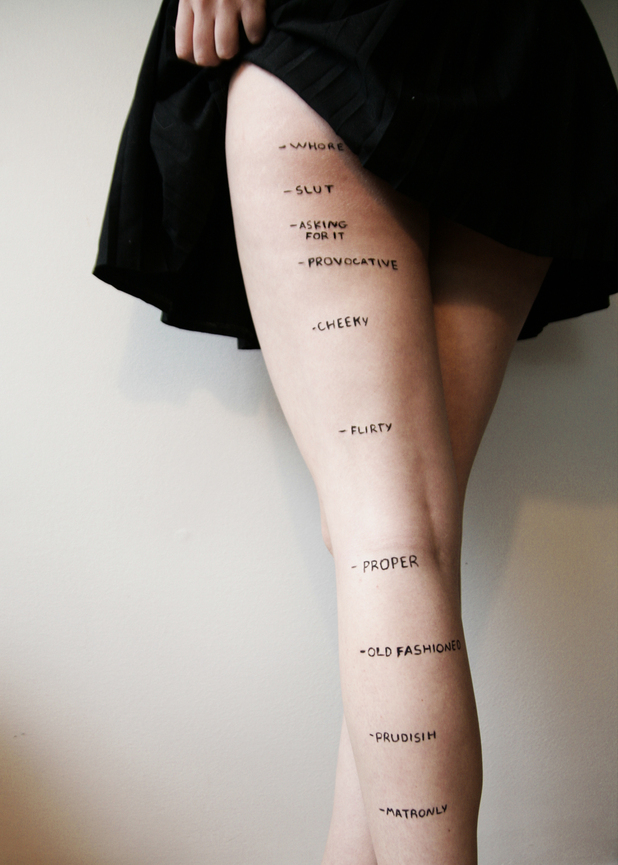
The truth is I think women should have control over their bodies, and that their sexual decisions should be their own. I think consenting adults should be free to have sex with whomever. I'm glad we live in a society in which birth control is legal and common, and I'd like to see better sex education so more people will use birth control effectively. I really dislike the double standards society has regarding men and women's sex lives. (For example, the phrase "man-whore" irritates me because it seems to imply that normally women are "whores," so in this case we have to clarify.) I can't stand the "slut vs. prude" dichotomy, as if women can only be one or the other, and we sure can't win either way. 

Choose your stereotype.
 
I also don't believe anyone has a duty to procreate, and I would love it if no one got pregnant who didn't want to be pregnant.

I do believe, though, that once a woman is pregnant, things have changed. I see a huge moral difference between preventing a pregnancy and terminating one, because I recognize the human fetus as part of our species, warranting protection. 

I don't take this position lightly. I understand how dramatically pregnancy, childbirth, and child-rearing alter women's lives. Indeed I think part of feminism is transforming society so that procreation doesn't affect women so disproportionately. We need better maternity leave and childcare options. We need to break down stigmas surrounding single, student, and working mothers. I'd love to live in a society where employers understand that supporting their pregnant and parenting employees means supporting productive citizens and healthy families. If our society had better support for pregnancy and child-rearing, I believe less women would feel compelled to choose abortion in the first place. 

But in any case, I flatly reject the idea that only when women are able to have their offspring killed can we have the same opportunities as men. If that's equality, it's an abysmal form.

I consider myself a feminist, and I'm pro-life. I know I'm not the only one.


[Re-posted at Secular Pro-Life]

Monday, February 25, 2013

A random song and my brain gets away from me.

I once read some quotes from wives who had been married for years or decades. All of the quotes were about how their husbands weren't the men they'd married, or how they'd been married to multiple husbands who were all the same man. The idea is that over time people do change, and you can live several different types of lives in one lifetime.

There are people I really dislike that I used to be close to, once upon a time. Without meaning to or even realizing it, I often think of the friends I once had and the people they are now as different people. I could never find those friends again, because they no longer exist. Their bodies are still here, but occupied by other personalities--there's no use in searching there for those long-gone friends. There's nowhere to look for them.

Of course I don't mean this literally. But sometimes it does feel as if I'm thinking of past lives, no longer accessible, instead of memories from my own life that I know must still be shared by other people, even if I never talk to them.

And just now, as I'm studying in a coffee shop, I hear a song that reminds me of a man I dated years ago. I still know him, and we're on friendly terms, but the song reminded me of how I used to see him, a perspective I don't remember often. And I realized that I also think of the man I dated and the man I'm friends with now as two different people, even though they are really one and the same.

We had a good relationship, with many good memories. Both of us are now in happy relationships with other people, and it would no longer be appropriate to reminisce with each other, which is fine. But it makes it strange--if you are the only person who remembers something, it can feel as if the something never really did happen to begin with. It's as if that man I dated is gone, replaced by a pleasant but different friendship.

And it makes me wonder (again) about marriage. Everyone says you shouldn't marry someone based on the assumption that they will change, and I agree. You can't make people change and you can't predict that they will change in specific ways. However people do change--how many people are really the same now as they were 10 years ago? Sure, there are common patterns, personality traits that persist, of course. But there are changes too. How can you commit to someone when the personality you're committing to might not be there in a decade or two?

Sunday, February 24, 2013

Defend your position!

Recently I've been discussing gay marriage more often than I normally do. Each discussion has been with a different traditional marriage proponent ("TMP"), but I've noticed a frustrating pattern.

Aside: I use the phrase "traditional marriage proponent" because that seems to be what people for heterosexual-only marriage call themselves. I think some parts of their stance may not be traditional depending on which period in history we look to for examples or marriage, but for simplicity's sake I'd rather just adopt people's self-descriptions and get to the actual arguments.

 People seem to think that marriage must mean either (1) heterosexual couples making lifelong commitments and producing children or (2) any consenting adults making lifelong commitments to love each other. In terms of government recognition and enforcement, I think both of these definitions are problematic.

When I talk to a TMP, the conversation often goes something like this (roughly paraphrased from multiple conversations):
TMP: Marriage requires a lifelong sexual union that bears children.

Me: Then why do we have [no-fault divorce/legal infidelity/infertile couples marrying]?

TMP: Well then what do you think marriage is?
No no no. Setting aside the gay marriage debate for a moment, this is not how it should work. People should be able to defend their perspectives regardless of what my perspective is. I could think marriage should be between dogs and cats and have completely idiotic reasons for thinking so, but that doesn't mean the holes in the TMP's arguments have disappeared. Shouldn't it bother people if there are holes in their arguments they can't reconcile?

I suspect TMPs think the options are either the TMP definition or the gay rights definition, so as long as they can poke enough holes in the gay rights definition, the TMP definition has to win by default. But I don't think that's the case. If I find holes in both definitions, why would I go TMP by default? If I hesitate over some aspect of the gay rights perspective on marriage, how would that prevent me from continuing to see holes in the TMP view as well?

Whether we're talking about gay marriage or any other topic of debate, I guess all I'm really trying to say is: defend your position or stop spouting it.

Wednesday, February 20, 2013

Maternity Leave


Keep on, Minnesota:

Rep. Sandra Masin was one of 16 house legislators to author the bill, H.F. 463, all of whom hail from the DFL party. Six of the co-authors were male. The legislation was introduced on Monday by the chief author, Minneapolis Rep. Phyllis Kahn.

The bill requires employers to grant a minimum amount of maternity leave to all women for a "reasonable period of time," with a maximum of up to 12 weeks of unpaid leave of absence for female employees disabled by pregnancy, childbirth, or related medical conditions. Additionally, the employee would be entitled to use of any accrued vacation or sick leave during this period of time.

If passed, the bill would also oblige employers to provide reasonable accommodation for employees laboring under conditions related to pregnancy and childbirth, as per the woman's request or the advice of her doctor. The legislators describe "reasonable accommodation" as seating, frequent restroom breaks, and limits to heavy lifting, among other things. If possible, the employer must transfer a pregnant woman to light duty, though no employer would be required to create a job that didn't previously exist. The bill further states that employers will not be required to displace or discharge other employees to accommodate a pregnant worker.

A different perspective:
For hard-working professional women accustomed to overloaded calendars and constant communication with colleagues and customers, the isolation of maternity leave can be a shock. After the birth of my first child, I used to joke with my husband that for the sanity of new mothers an iPhone should be just as mandatory as a car seat when leaving the hospital. Yes, bonding with your baby during middle-of-the-night feedings is a wonderful thing, but when you’re stuck in a chair nursing several hours every day, that smartphone can also feel like a much-needed lifeline to the outside world.
...
What happens much more often, according to Mathiason, is that professional women are upset when they aren’t allowed to continue communicating with clients, directing projects or managing their teams while on leave. In fact, pregnancy-related litigation is actually up in recent years, he says, as more women come back from maternity leave, get laid off several months later for reasons that may be unrelated to their leave, and argue they weren’t kept in the loop while they were away.

Maternity leave for teens?
New Mexico's public schools will be required to grant leave to teenage parents under legislation approved by the House.
  
The measure will establish a statewide policy requiring at least 10 days of leave when a student gives birth. The excused absences also will be available to the child's father.
  
A pregnant teen or student who is a parent will receive four days of leave per semester. That's in addition to the absences allowed for all students.
  
Schools must provide an opportunity for students to make up the work they missed while on maternity or parenting leave.

Monday, February 18, 2013

Universe Without Purpose

Recently I've had several conversations about objective morality, a subject I haven't really wrestled with before. I wish I had more time to blog, as I've had a lot of thoughts on it that I'm afraid I won't be able to recall once I do get a chance. Pity, I don't have time right now, but this image seemed related and I found it a little bit comforting.


Wednesday, February 13, 2013

On Gay Marriage

I'm for gay marriage, but I don't think I've really examined how I got to that stance. In this post I am exploring my own thoughts, so it might be pretty meandering.

I was raised to believe homosexuality (or, to be more specific, homosexual sex) is wrong. I vaguely agreed until midway through high school when I became friends with a select few gay people. And here I'm not talking about teenagers who want attention and make a big deal about coming out one month and then are back to being straight the next. Here I'm talking about people who hid that they were gay. They tried not to be gay through prayer or heterosexual dating or sheer will, and they feared the reactions of their parents and friends should they find out.

Through witnessing their struggles--in some cases desperately so--to not be gay, I came to believe that being gay isn't much of a choice. Or rather, I think it might be sort of a choice for some people and not as much for others. I agree with people who say sexuality is more of a spectrum than a bunch of check boxes. I know people who are so straight (or gay) that the thought of sex with the same (or opposite) sex just completely weirds them out. And I've known bisexuals that seem pretty open to either. I've also known people that are open to dating the same sex but mostly prefer the opposite, or vice versa. In that sense I expect there are some people who could more easily choose to live a heterosexual lifestyle than others, because they already lean hetero so it's not as much of a leap. But even in those cases I'm not convinced people choose to be "a little bit bi."

On the other hand, I'm dubious that being gay (or straight, really) is purely biological. I suspect there's a strong biological basis but that other factors from birth until whenever can influence it one way or another. I'm sure there are plenty of non-straight people even now that are completely aware of their sexualities but won't come out for fear of the repercussions. But I also think there are a lot of people who genuinely consider themselves straight that, if they'd been raised in a very different culture, would be much more open to sexual interactions with the same sex. Not everyone, of course. I think it's clear that the strong majority of people are simply straight. Still I expect if no one objected to homosexuality we'd have both a lot more people coming out and a lot more people (who never felt repressed in the first place) experimenting.

Anyway, all that is to say I don't think sexuality is wholly a choice, or that much of a choice, and I don't see any reason to believe it's wrong. But--unlike what seemingly all gay marriage proponents suggest--I think whether homosexuality is immoral is a distinct topic from whether gay marriage should be legal.

The gay marriage debate annoys me because gay marriage proponents seem to sincerely think that the only reason you could oppose gay marriage is bigotry. I may not find the arguments against gay marriage compelling, but I think most of the people who make those arguments find them compelling. I'm not going to do that thing where you assume your ideological opponents secretly agree with your premises and only oppose you because they're just bad people. I'm not going to assume that arguments against gay marriage are just a flimsy cover up for homophobia. Some people are homophobic, yes, I'm not denying that--I'm just rejecting the idea that everyone who has a problem with gay marriage must, by definition, be homophobic. (By the way, this sounds exactly like the assertion that everyone who is pro-life must, by definition, hate women.) It's just so much easier to ignore our opposition when we vilify them first.

As I said, I was ambivalent on gay marriage for a long time, and for three main reasons:
  1. Unlike (apparently) most secularists, I think freedom of religion is important.
  2. I don't understand why the government is involved in marriage in the first place.
  3. I generally think the arguments for gay marriage are pretty weak.
#1: I don't want to tell you what you can (or can't) believe any more than I want you to tell me. And I don't want to say "Sure, believe what you want, as long as you don't actually try to live your life according to beliefs I disagree with." What's the difference between that and telling you what to believe?

I think situations where freedom of religion comes in conflict with civil rights are pretty tricky. Secularists tend to dismiss these situations as an excuse for prejudice, and certainly they can be used to justify prejudice, but I don't think it's that simple. How about the Muslim barber who wouldn't cut a woman's hair because it's against his religion? The woman was angry because she felt discriminated against based on her gender; the barber was upset because he believes it's wrong to touch a woman outside of his own family. Secularists tend to dismiss the barber because they don't share his beliefs about gender and family. But what's the difference between us dismissing (or trying to legally override) religious beliefs because we feel our beliefs make more sense, and religious people dismissing (or trying to legally override) our beliefs because they think theirs make more sense? It's a culture clash but I don't think it makes sense to assume by default that whichever is the religious side ought to lose.

It's like free speech. I don't agree with how everyone uses the right (I'm looking at you, WBC) but I want the right protected even for people I heartily disagree with because I also want the right protected for myself. The same goes for freedom of religion--I want people to be able to believe what they want and live accordingly--even if I don't think their beliefs make sense--because I want to be able to believe what I want and live accordingly too.

Obviously this can't be unlimited. If someone follows a religion that says you should shoot all 4-year-old, we're going to have a problem. My point here is not that freedom of religion should be unlimited (how can it be, with so many conflicting views?) My point is to say that freedom of religion is relevant and should be taken into account in the discussion.

I don't think legalizing gay marriage inherently takes away from freedom of religion. But I do think there's merit to the suggestion that as gay rights increase, religious people and institutions are open to legal action if they refuse to perform marriages for gay people, or set up adoptions, or teach their children that homosexuality is acceptable, and so on. In other words I doubt we can expand gay rights without limiting religious freedoms, and while that may be well worth, it I still think we should acknowledge the point.

#2: If we could strengthen gay rights without limiting any other rights I don't know that there'd even need to be a conversation about this; it's all benefit, no cost. However I think expanding the rights of some necessarily limits others. That might be okay (it certainly was when we ended segregation, after all) but I think it's worthwhile to look at costs and benefits. And this is another reason I used to get tripped up. I don't see a huge benefit to allowing gay marriage because I don't see a huge benefit to having state recognition of marriage in the fist place, gay or straight. In fact, I kind of wish we just got rid of legal marriage entirely, so in a sense gay marriage is moving in the opposite direction of where I think we should go.

Don't get me wrong. It's clear marriage is monumentally important to a lot of people. I don't think society needs to get rid of marriage. I just don't see the point of having the legal recognition. My best friends are important to me too, but I don't need the government to formally acknowledge it and in fact I'd feel pretty irritated if people thought my friendships were somehow "lesser" than their friendships based solely on the fact that I hadn't gotten the government to acknowledge my friendships. What the hell do I care what the government thinks?

Ultimately marriage is what the people in the marriage make it. I think the ideas of love combined with lifelong commitment are lovely, and I also think you can have those whether the government gives you a license or not. When it comes to it, I would respect and admire a legally unmarried couple who loved each other and stayed together for life a great deal more than a legally married couple that treated each other like crap and eventually got divorced (as we know so many of them do). That's not to say the only options are sucky legal marriages or wonderful cohabitations--not at all. Some people get legally married and love and commit to each other for life. And that's awesome. I just think the love and commitment are way more important and I don't really see what the legal part brings to the table, relationship-wise.

Yes, I know being legally married includes certain rights and benefits, but frankly I don't see why. What's the government/societal interest there? Why should married people pay less in taxes than single people? Is it because we want to encourage people to create families? We can just give tax credits to people who have children, no? Don't we already do that anyway? Why should married people who don't have children pay less in taxes?

And why should only spouses and blood relatives be able to visit you in the hospital? Goodness knows our blood relatives are not necessarily the people we're closest to, or even the people we love. You should be able to designate whomever you want to visit you in the hospital, or to make medical decisions for you when you're not capable--and I may be ignorant on this, but I think you can do that anyway. I don't see why you should need legal marriage to be able to do that.

Again, this is not to say I want to get rid of marriage itself. Given my way people would continue to get married in whatever weddings or commitment ceremonies they see fit, but the government wouldn't have anything to do with it. Society can reflect how seriously it takes marriage and how sacred marriage is just as much by continuing to get married and then making those commitments priorities. Envision a society where people commit to each other without legal enforcement and then stay committed to each other because, hey, they really meant it in the first place.

Not to mention this solution eliminates the gay marriage debate anyway. No special government treatment if the government is irrelevant to marriage.

#3: My overall understanding of the argument for gay marriage is that consenting adults who love each other should be able to marry each other. Some gay marriage proponents mock their opposition for acting as if this definition implies way more than it does. For example, check out this graphic explaining why gay marriage would not necessitate allowing pedophilia, necrophilia, or bestiality.

However, notice the graphic leaves out polygamy and incest. People get indignant when you suggest either of those are somehow related, but, well, they are. If the definition we are to accept is "consenting adults who love one another," there's nothing in it about the number of consenting adults or whether they're related. And you can add in that, sure--say the definition is "between two consenting, unrelated adults who love each other"--but I'd be pretty interested to hear the objective rationale for limiting marriage to two people, or to unrelated people. Most opponents of gay marriage use religious reasoning, which they can also apply when they oppose polygyny, polyandry, polyamory, incest, and so on. But from what I've seen gay marriage proponents tend to reject (or ignore) religious authority on the subject, so it'd be tricky to invoke that same authority in order to ban other formal recognition of other sexual relationships.

I've known some gay marriage proponents who readily accept polygamy and even incest (in some forms) as the logical conclusions of their argument. I've known some who reject the ideas, but I suspect they might not personally care so much but are thinking "one battle at a time." It's not pragmatic for the gay rights movement to openly embrace polygamy and incest; it would only strengthen the opposition right now. And then I've known a few who sincerely reject polygamy and incest, but it's amazing how their reasons for rejection sound so similar to older arguments against homosexuality.

This whole thing seems like a struggle between these ideas: "Marriage is the thing where man and woman commit and love one another and probably have kids together" or "Marriage is the thing where adults commit and love each other." Given the changing purposes and definitions of marriage over time, these definitions seem about equally arbitrary to me. One is just a lot broader than the other.

Anyway, so I do think fighting for gay marriage amounts to fighting to redefine marriage as something far broader and then, perhaps, less meaningful than marriage was supposed to have been in our country's history--at least our recent history. And arguing that any adults who love each other should be able to marry doesn't seem that compelling to me, since the government can't stop you from lifelong commitment whether they formally recognize it or not, and since I don't really get why the government recognizes it in some cases in the first place, nor why people should care whether the government recognizes it or not.

So then why am I for gay marriage?

A few reasons:
  1. I don't find anything morally objectionable about being gay and I think the government should treat people equally. Since the government isn't actually going to get out of straight marriage, may as well open it up to whomever.
  2. Even if I think gay marriage specifically doesn't make a ton of sense, I also think the fight for gay marriage is contributing to more compassion and acceptance of gay people, which is good.
  3. I find the arguments against gay marriage even weaker than the arguments for it.
#1: I think religious institutions should have the freedom to serve according to their beliefs, which includes the freedom to refuse to perform homosexual weddings, if that's what they want. I don't think you should be able to make people do things they think are wrong, (although I can think of exceptions and I recognize an inherent conflict of rights here). However I think the government should have to treat people equally, absent a compelling argument for a difference (e.g. children are treated differently than adults because they lack the experience and rationality required for adult responsibilities). I think the better equality, again, would be to get the government out of marriage, but no one is really considering that, so here we are.

#2: Even if a couple doesn't care whether the government recognizes a relationship, it matters that society treats people so differently. And if I trusted people to acknowledge differences but still be kind, I might not make this point. However I have seen enough stories (and personally heard enough statements) of broader anti-gay feelings to believe that society would be improved by being more accepting of homosexuality. I think the fight for gay marriage very much influences people to be more accepting, so while I'm dubious about the marriage part itself, I think the fight is having a good effect.

#3: So far the arguments I've seen against gay marriage boil down to the belief that marriage requires procreation. Now, obviously procreation is important to our species as a whole, and to our country specifically and so on. However:
  • Plenty of straight married people don't have and never intended to have kids, and it doesn't seem to be a problem for the married people who have kids anyway.
  • Procreation is important, but I don't see why it is only important when done naturally by a man and woman. Lesbian couples can do IVF. Gay couples can get surrogates.
  • Procreation is important, but so is a stable home for child-rearing. I sometimes wonder whether gay marriages can bring more gravity and honor to the institution of marriage because they've shown how much it means to them to make that commitment, and not just live with each other. Ideally gay marriages would be especially stable, and gay couples could adopt. (In reality I see no reason to believe that gay divorce rates would be any different than straight ones, but you can always hope.)
  • Given how many children wait for adoption,  I think the more loving couples we have that want to adopt, the better. I do believe that a mother and father are ideal because they can teach about the different genders, but I also believe that a mother and mother or father and father are a good deal better than foster care.
I can see a societal interest in creating stable family units, I'm just not convinced gay marriage undermines that interest.

I am really tired, I think I'm just going to stop here. Abruptly.

Monday, February 11, 2013

Catholicism and Pedophilia

I woke up this morning to a lot of statuses about the Pope resigning. Most of them were from Catholics  reflecting on the Pope's teachings and wondering what will happen next. Some of them were from atheists making joking comparisons between the Pope and Emperor Palpatine (there are those that see a physical resemblance). And, as with pretty much any situation where Catholicism is in the headlines, I saw a lot of statuses about child abuse and pedophile priests.

Seems to me that non-Catholics, especially secularists, associate pedophilia a lot more with the Catholic Church than other institutions (such as other religious denominations, public schools, or say, the family.) Look, it's bad no matter where it comes from, but I'm dubious the Catholic Church merits the close association everyone assigns it. As Pat Wingert of The Daily Beast explains,
Many point to peculiarities of the Catholic Church (its celibacy rules for priests, its insular hierarchy, its exclusion of women) to infer that there's something particularly pernicious about Catholic clerics that predisposes them to these horrific acts. It's no wonder that, back in 2002—when the last Catholic sex-abuse scandal was making headlines—a Wall Street Journal-NBC News poll found that 64 percent of those queried thought Catholic priests "frequently'' abused children. Yet experts say there's simply no data to support the claim at all.
...
Since the mid-1980s, insurance companies have offered sexual misconduct coverage as a rider on liability insurance, and their own studies indicate that Catholic churches are not higher risk than other congregations. 
According to Wingert's article, estimates suggest 4% of Catholic priests have abused children, compared to roughly 10-20% of the general male population.

Of course if the best defense for the Catholic Church is that everyone else is even worse, I don't find that terribly reassuring. After all, 4% is still way too high. But my point here is not to defend of condemn Catholics, but to figure out why Catholics are associated so much more strongly with child abuse when they actually abuse at a rate equal to or less than everyone else. A few thoughts:

  1. People react strongly to hypocrisy. Child abuse is always bad. Child abuse from institutions that are supposed to be moral authorities in the world is even worse.
  2. You'd think, then, that people would be equally appalled by all other religious denominations (not to mention school teachers) that abuse. And I expect people would be equally appalled, but you hear about it more in regard to Catholics. Wingert suggests a few reasons for why this is the case:
  • Catholicism is one of the largest religious denominations in the country (there are more protestants than Catholics, but Protestantism is broken into many denominations). The rate of Catholic abuse may be equal or less than others, but the raw numbers will be higher as compared to smaller denominations.
  • Catholic sex abuse scandals have been made public in waves. Victims often delay reporting, but when some come forward others realize they aren't alone and feel encouraged to report as well. What might seem like a high concentration of scandals is actually a diffuse pattern over years or decades that comes to light all at once. This pattern is similar to abuse patterns for the general male population, but it appears much worse because of the way it's reported.
  • The Church has been historically bad at punishing and preventing this sort of abuse, and this can result in a single priest abusing many children before he is revealed. In other words there haven't been very many abusive priests, but many of those who have been abusive have been able to go on for far too long without intervention. One study estimated over 160 abuse cases per abusive priest.
Again, it's not exactly reassuring to think that Catholics aren't that special because everyone else abuses children at least as much, if not more. It's freaking awful. 

However, given the seeming eagerness of some detractors to bring up pedophilia every time Catholicism gets mentioned in any context, and given my own (now confirmed) suspicions that it is not somehow a Catholic-specific phenomenon, I tend to see the accusations as more of an anger at Catholicism (or religion in general) than as an anger over child abuse. Although there's no reason it can't be both, really.

Friday, February 8, 2013

Foiled!

I've noticed if I don't write a blog post about an idea in the moment (or within an hour) of the idea occurring to me, I lose interest soon after. I've got about 4-5 drafts of ideas that occurred to me in the last week or two while I was trying to study or work, and since I didn't stop and write them then, now I don't care. Topics included:

  • Another "stupid abortion conversation"
  • White Privilege
  • Revoking consent
  • Free will
These will probably all come up again, right?

Wednesday, January 30, 2013

"Bro, do you want someone to do that to you?"

Some religious people believe you can't have morality without God, and therefore atheists have no reason to act morally. Some atheists respond by saying they don't need the threat of eternal damnation to get them to act like decent human beings.

As an agnostic, I don't see why a belief in God is necessary in order to want to live a moral life. I can see the benefits of the Golden Rule regardless of whether you think someone will eternally reward (or punish) you depending on how you behave.

Exactly.

And I have secular friends that I think are perfectly lovely people, so I'm obviously not convinced that without God we are all just awful.

I will say, though, that when people insist religion is the only reason anyone would be pro-life, they sure do reinforce the "atheists have no morality" stereotype.

I'm against abortion because I recognize the fetus as a member of our species and I believe human beings should be valued and protected; at minimum, I think it should be illegal to non-defensively kill someone. I don't consider any of what I just said to be radical, and I don't see why any of what I just said would require religious faith in order to make sense. From the pro-life perspective, when people insist you have to be religious to be pro-life they're insisting that you have to be religious to value humanity and/or think it's wrong to kill others. Great.

But I understand that there's a disconnect here. Many pro-choicers make a distinction between human beings and people, and while the fetus is a human being, they will insist the fetus is not a person. A pro-choicer could believe that all people should be valued and protected while all fetuses can be killed, and there would be no inconsistency in that stance. So, from a pro-choice perspective, the idea that you must be religious to be pro-life is really the idea that you must be religious to believe the fetus is a human being of moral value.

I still think it's kind of sad that some secularists believe you have to be religious to value all members of our species...but I guess it's better than thinking you must be religious to think, you know, killing others is bad.

Unborn Parasite?

Disclaimer: I know both pro-choicers and pro-lifers who understand fetal development. The following post is not meant to address everyone, but to specifically address the people who remain ignorant.

Mary Elizabeth Williams at Slate.com wrote a piece explaining that she understands abortion takes a human life, but that "some lives are worth sacrificing." Obviously I disagree with her general take, but I thought this paragraph was quite true:
I have friends who have referred to their abortions in terms of “scraping out a bunch of cells” and then a few years later were exultant over the pregnancies that they unhesitatingly described in terms of “the baby” and “this kid.” I know women who have been relieved at their abortions and grieved over their miscarriages. Why can’t we agree that how they felt about their pregnancies was vastly different, but that it’s pretty silly to pretend that what was growing inside of them wasn’t the same? Fetuses aren’t selective like that. They don’t qualify as human life only if they’re intended to be born.
It's no secret that most people make decisions based on emotions more than rational thought. One side tends toward the vague and impersonal (clump of cells, products of conception) or hostile (parasite, invader) while the other side goes with the personal (daughter, son, child) and helpless (preborn, unborn, baby). And so on.

I've seen pro-choicers mock pro-lifers for using photos of full grown babies, pointing out that the majority of abortions take place before 8 weeks gestation, and accusing pro-lifers of playing emotional manipulation by confusing everyone as to what's actually being destroyed here. I've heard pro-lifers loudly wonder why pro-choicers never depict fetal development at all, pointing out that pro-choicers tend to leave the fetus out of the equation entirely, and claiming pro-choicers deceive people with a "nothing to see here, folks" approach.

Of course what the fetus "looks like" should have about zero bearing on whether the fetus deserves rights or protection, but for the record:


If pro-lifers only used pictures of actual embryos and early-stage fetuses, do you think it would change the abortion debate? Do you think it would be a good idea? Is it more important to be emotionally captivating or precisely accurate?

[Re-posted on Secular Pro-Life]

Monday, January 28, 2013

My Ideal America: Careers vs. Child-rearing


I think people should be careful not to confuse biological drives with social requirements.

Specifically, I believe women are more likely than men to have a biological urge to stay at home and raise children, and I don't think there's anything wrong with that. My problem is when society (the ever ambiguous "society") pressures individual women to sacrifice their careers and be stay-at-home moms whether they happen to have that biological urge or not.

Similarly, I think men are more likely than women to have a biological urge to go out and build careers and financially support their families, and I think that's great. My problem is when society pressures individual men to go out in the work force and not stay at home with their children whether they happen to have that biological urge or not.

I think we have biologically-based gender differences that are socially reinforced. I'm not sure how acute those differences would be if society didn't reinforce them, though I still think the differences would exist. I would prefer that each couple decides between themselves how they want to balance careers, financial concerns, and child-rearing without having to factor in how the vague "society" will react to those decisions.

I expect a mind-your-own-business society would mean more stay-at-home dads and more bread-winning moms than there are right now, though overall there would still be more stay-at-home moms than dads, and more bread-winning dads than moms. Either way, people should be able to play to their strengths regardless of whether their strengths follow typical gender norms.

Also, this movie is really funny. I love Michael Keaton.

Thursday, January 24, 2013

Thoughts on polling and labels.

Even as Planned Parenthood moves away from the "Pro-choice" label, more Americans are adopting it. Again. 

According to Gallup 48% of Americans describe themselves as "pro-choice," compared to 44% who describe themselves as "pro-life." Yet only last year Gallup reported a record low number of self-described pro-choicers (41%, compared to 50% "pro-life"). That's a lot of fluctuation, and (again according to Gallup's trends) the labels have been fluctuating for several years now.

Depending on which way the percentages move, one side of the other will emphasize the poll and talk about long-term, big-picture changes in the never-ending national abortion debate. Maybe they're right, but I don't think we can really see that from these polls. 

Labels like "pro-life" and "pro-choice" are not as well-defined as abortion activists like to suggest. I suspect people's reasons for choosing one label or another have to do with a lot of factors beyond their perspective on abortion specifically. For example, some pollsters suggest recent changes may be due to ignorant Republican comments about rape and pregnancy, or due to last year's contraception debates. I also suspect adherence to pro-choice and pro-life labels have a lot to do with how people feel about the Democrat and Republican parties at a given time, even if their feelings about the parties change due to topics other than abortion.

And of course there's a lot of ambiguity about what the terms "pro-choice" and "pro-life" imply. To my mind, a pro-choice person is someone who believes, at minimum, that women should be able to get abortions for any reason during the first trimester, and for severe reasons (rape, life/health of the mother, fatal fetal abnormalities) in the second two trimesters. A "pro-life" person is someone who believes, at minimum, that abortion should be illegal throughout all stages of the pregnancy except for those severe reasons. There are more "pure" pro-choicers and pro-lifers who may argue that the above definitions compromise too much, but my point here is not ideological purity. I'm trying to summarize what I think the majority of people in the abortion debate would consider "pro-choice" or "pro-life."

Yet I've met people who think that they are technically pro-choice because they believe in exceptions for rape and life of the mother. And I've met plenty of "personally pro-life" people who think abortion is a necessary evil that should be legal. How do people like these respond to polls?

Meanwhile, as Secular Pro-Life has pointed out, a recent Pew Research Poll found only 62% of adults knew Roe v. Wade was about affirming a woman's right to an abortion. In fact, 17% of adults thought the case had to do with school desegregation, the death penalty, or environmental problems. I don't really blame them--if you're not passionate about abortion I can understand not knowing anything about Roe v. Wade. I'd be hard-pressed to name a landmark SCOTUS decision about the environment.

Still, I wonder how much national ignorance plays a roll when Gallup asks people whether they thought Roe v. Wade should be overturned (53% said no, 29% said yes, and 18% said they don't care).

It's also interesting how the "pro-choice" and "pro-life" demographics break down:


Religion.

Having no religion is the biggest predictor for being pro-choice--bigger, even, than being liberal. Note, though, that the intense correlation doesn't cut both ways: 80% of the nonreligious are pro-choice, yet only 50% of non-Catholic Christians and 45% of Catholics are pro-life. In fact, more Catholics called themselves pro-choice than pro-life! And yet we're allegedly a Catholic movement?


Politics.

73% of liberals and 63% of Democrats call themselves pro-choice. 63% of conservatives and 67% of republicans call themselves pro-life. I never have been that clear on the distinctions between liberal/Democrat and conservative/Republican. They seem to generally follow the same polling trends. In any case this still leaves roughly 1/3 of Democrats who don't consider themselves "pro-choice" and 1/3 of Republicans who don't consider themselves "pro-life." If the labels weren't so strongly associated with specific political parties, how might that change peoples' self-descriptions?


Education.

The more college education a person has, the more likely they are to say they're pro-choice. Other polls have shown the more college education a person has, the less religious that person tends to be. And it's no surprise that education is positively correlated with income. In other words, while it's clear that education and the "pro-choice" label are correlated, it's not clear whether (a) increased education causes people to be pro-choice, (b) being pro-choice makes it easier for people to increase their education (how many women cite disruption to their education as a reason to get an abortion?), or (c) being pro-choice and being well-educated are both correlated with some third causal factor, like being non-religious.


Income.

I think this factor surprised me the most. According to Guttmacher, 73% of women who get abortions cite financial problems as a major reason. Yet the less income a person has, the less likely they are to say they're "pro-choice." I'm not sure what to make of that.


I would love to see a poll that asks more about the legality of abortion, and less about labels. It should also ask not just whether abortion is moral or immoral, but why respondents think it's moral or immoral. Maybe that would shed more light on the national perception of the abortion debate.

Re-posted at Secular Pro-Life